AI Writing Tools

Explore the best AI Writing Tools — independent reviews, comparisons, pricing and step-by-step how-to guides, curated by Aizhi.

  • Reciprocal human machine learning

    Reciprocal human machine learning

    Reciprocal Human Machine Learning (RHML) is an interdisciplinary approach to designing human-AI interaction systems. RHML aims to enable continual learning between humans and machine learning models by having them learn from each other. This approach keeps the human expert "in the loop" to oversee and enhance machine learning performance and simultaneously support the human expert continue learning. == Background == RHML emerged in the context of the rise of big data analytics and artificial intelligence for intelligent tasks like sense-making and decision-making. As machine learning advanced to take on more roles, researchers realized fully autonomous systems had limitations and needed human guidance. RHML extends the concept of human-in-the-loop systems by promoting reciprocal learning. Humans learn from their interactions with machine learning models, staying up-to-date on evolving technology. The models also learn from human feedback and oversight. This amplification of learning on both sides is a key focus of RHML. The approach draws on theories of learning in dyads from education and psychology. It also builds on human-computer interaction and human-centered design principles. Implementing RHML requires developing specialized tools and interfaces tailored to the application == Applications == RHML has been explored across diverse domains including: Cybersecurity - Software to enable reciprocal learning between experts and AI models for social media threat detection. Organizational decision-making - RHML to structure collaboration between humans and AI systems. Workplace training - Using RHML for workers to learn from AI technologies on the job. Open science - Using human and AI collaboration to promote open science. Production and logistics - turning workers and intelligent machines into teammates. RHML maintains human oversight and control over AI systems, while enabling cutting-edge machine learning performance. This collaborative approach highlights the importance of keeping the human expert involved in the loop. An example of RHML in application is Free Spirit (AFSFCV), an open-source architecture first published in early 2025 as a whitepaper, proposing a visually structured approach to intent-based human–AI interaction.

    Read more →
  • SD-WAN

    SD-WAN

    A Software-Defined Wide Area Network (SD-WAN) is a wide area network that uses software-defined networking technology, such as communicating over the Internet using overlay tunnels which are encrypted when destined for internal organization locations. If standard tunnel setup and configuration messages are supported by all of the network hardware vendors, SD-WAN simplifies the management and operation of a WAN by decoupling the networking hardware from its control mechanism. This concept is similar to how software-defined networking implements virtualization technology to improve data center management and operation. In practice, proprietary protocols are used to set up and manage an SD-WAN, meaning there is no decoupling of the hardware and its control mechanism. A key application of SD-WAN is to allow companies to build higher-performance WANs using lower-cost and commercially available Internet access, enabling businesses to partially or wholly replace more expensive private WANs connection technologies such as MPLS. When SD-WAN traffic is carried over the Internet, there are no end-to-end performance guarantees. Carrier MPLS VPN WAN services are not carried as Internet traffic, but rather over carefully controlled carrier capacity, and do come with an end-to-end performance guarantee. == History == WANs were very important for the development of networking in general and for a long time one of the most important applications of networks both for military and enterprise applications. The ability to communicate data over long distances was one of the main driving factors for the development of data communications, as it made it possible to overcome the distance limitations, as well as shortening the time necessary to exchange messages with other parties. Legacy WANs allowed communication over circuits connecting two or more endpoints. Earlier networking supported point-to-point communication over a slow speed circuit, usually between two fixed locations. As networking progressed, WAN circuits became faster and more flexible. Innovations like circuit and packet switching (in the form of X.25, ATM and later Internet Protocol or Multiprotocol Label Switching) allowed communication to become more dynamic, supporting ever-growing networks. The need for strict control, security and quality of service (QOS) meant that multinational corporations were very conservative in leasing and operating their WANs. National regulations restricted the companies that could provide local service in each country, and complex arrangements were necessary to establish truly global networks. All that changed with the growth of the Internet, which permitted entities around the world to connect to each other. However, over the first years, the uncontrolled nature of the Internet was not considered adequate or safe for private corporate use. Independent of safety concerns, connectivity to the Internet became a necessity to the point where every branch required Internet access. At first, due to safety concerns, private communications were still done via WAN, and communication with other entities (including customers and partners) moved to the Internet. As the Internet grew in reach and maturity, companies started to evaluate how to leverage it for private corporate communications. During the early 2000s, application delivery over the WAN became an important topic of research and commercial innovation. Over the next decade, increasing computing power made it possible to create software-based appliances that were able to analyze traffic and make informed decisions without delays, making it possible to create large-scale overlay networks over the public Internet that could replicate all the functionality of legacy WANs, at a fraction of the cost. SD-WAN combines several networking aspects to create full-fledged private networks, with the ability to dynamically share network bandwidth across the connection points. Additional enhancements include central controllers, zero-touch provisioning, integrated analytics and on-demand circuit provisioning, with some network intelligence based in the cloud, allowing centralized policy management and security. Networking publications started using the term SD-WAN to describe this new networking trend as early as 2014. With the rapid shift to remote work as a result of lockdowns and stay at home orders during the COVID-19 pandemic, SD-WAN grew in popularity as a way of connecting remote workers. == Overview == WANs allow companies to extend their computer networks over large distances, connecting remote branch offices to data centers and to each other, and delivering applications and services required to perform business functions. Due to the physical constraints imposed by the propagation time over large distances, and the need to integrate multiple service providers to cover global geographies (often crossing nation boundaries), WANs face important operational challenges, including network congestion, packet delay variation, packet loss, and even service outages. Modern applications such as VoIP calling, videoconferencing, streaming media, and virtualized applications and desktops require low latency. Bandwidth requirements are also increasing, especially for applications featuring high-definition video. It can be expensive and difficult to expand WAN capability, with corresponding difficulties related to network management and troubleshooting. SD-WAN products are designed to address these network problems. By enhancing or even replacing traditional branch routers with virtualization appliances that can control application-level policies and offer a network overlay, less expensive consumer-grade Internet links can act more like a dedicated circuit. This simplifies the setup process for branch personnel. SD-WAN products can be physical appliances or software based only. === Components === The MEF Forum has defined an SD-WAN architecture consisting of an SD-WAN edge, SD-WAN gateway, SD-WAN controller and SD-WAN orchestrator. ==== SD-WAN edge ==== The SD-WAN edge is a physical or virtual network function that is placed at an organization's branch/regional/central office site, data center, and in public or private cloud platforms. MEF Forum has published the first SD-WAN service standard, MEF 70 which defines the fundamental characteristics of an SD-WAN service plus service requirements and attributes. ==== SD-WAN gateway ==== SD-WAN gateways provide access to the SD-WAN service in order to shorten the distance to cloud-based services or the user, and reduce service interruptions. A distributed network of gateways may be included in an SD-WAN service by the vendor or setup and maintained by the organization using the service. By sitting outside the headquarters in the cloud, the gateway also reduces headquarters traffic. ==== SD-WAN orchestrator ==== The SD-WAN orchestrator is a cloud hosted or on-premises web management tool that allows configuration, provisioning and other functions when operating an SD-WAN. It simplifies application traffic management by allowing central implementation of an organization's business policies. ==== SD-WAN controller ==== The SD-WAN controller functionality, which can be placed in the orchestrator or in an SD-WAN gateway, is used to make forwarding decisions for application flows. Application flows are IP packets that have been classified to determine their user application or grouping of applications to which they are associated. The grouping of application flows based on a common type, e.g., conferencing applications, is referred to as an Application Flow Group in MEF 70. Per MEF 70, the SD-WAN Edge classifies incoming IP packets at the SD-WAN UNI (SD-WAN user network interface), determines, via OSI Layer 2 through Layer 7 classification, which application flow the IP packets belong to, and then applies the policies to block the application flow or allow the application flows to be forwarded based on the availability of a route to the destination SD-WAN UNI on a remote SD-WAN Edge. This helps ensure that application performance meets service level agreements (SLAs). == Required characteristics == The Gartner research firm has defined an SD-WAN as having four required characteristics: The ability to support multiple connection types, such as MPLS, last mile fiber optic network or through high speed cellular networks e.g. 4G LTE and 5G wireless technologies The ability to do dynamic path selection, for load sharing and resiliency purposes A simple interface that is easy to configure and manage The ability to support VPNs, and third party services such as WAN optimization controllers, firewalls and web gateways == Features == Features of SD-WANs include resilience, quality of service (QoS), security, and performance, with flexible deployment options; simplified administration and troubleshooting; and online traffic engineering. === Resilience === A resilient SD-WAN reduces network downtime. To

    Read more →
  • Algorithmic curation

    Algorithmic curation

    Algorithm curation is the selection of online media by technologies such as recommender systems and personalized search. Curation entails the selective sharing of online content and recommendations based on inferred interests. Curation algorithms implement different filter approaches, such as collaborative filtering and content-based filtering. Examples include search engine and social media products such as the Twitter feed, Facebook's News Feed, and Google Personalized Search. == History == === Early algorithmic curation === Online platforms use newsfeed algorithms to determine what content to present to each user. The volume of content published on social media platforms created a need for automated filtering, as manual review of all available content by users is not feasible. These systems function as a form of gatekeeper, shaping which new material users are exposed to and influencing knowledge, attention, and political exposure. ==== Information overload ==== Early ranking algorithms addressed information overload by surfacing the most recent or most popular posts. Later systems shifted toward ranking content based on predicted engagement, aiming to increase the time users spend on a platform. Research has found that these engagement-oriented systems can increase the spread of misinformation and contribute to political polarization as a side effect of optimising for user interaction. ==== How algorithm changes users' feeds over time ==== Algorithmic curation has been found to increase source diversity in some respects while simultaneously reducing the number of external links presented to users, which limits exposure to off-platform content. Research using agent-based modelling has examined how user behaviour, information quality, and algorithmic design interact with one another over time. === Emergence of AI === Platforms increasingly shifted from rule-based ranking systems toward machine-learning and AI-driven approaches, which allow feeds to be personalised at a larger scale and with greater responsiveness to user behaviour. For example, X (formerly Twitter) moved away from a chronological feed toward an AI-powered ranking system that personalises content for each user. These systems are capable of making ranking decisions across volumes of content and user interactions that would not be practical to handle manually. == Approach == === Filter types === ==== Collaborative filtering ==== Collaborative filtering (CF) methods create recommendations based on a person's usage patterns. CF predicts a person's preference for an item by matching their interests with those of users who have similar interests. This process allows for the sharing of ratings between users with similar profiles. CF is based on patterns of human behaviour rather than machine analysis of content itself. Users of CF systems rate items they have interacted with, and these ratings form a profile of interests. The CF system then matches that user with others who have similar profiles, and uses their ratings to generate recommendations. Collaborative filtering can be applied across various content types including text, images, music, and financial products, and can account for complex attributes such as taste and quality that are difficult to represent explicitly. ==== Content-based filtering ==== Content-based filtering (CBF) builds a user profile to represent the types of items a user has engaged with, based on keywords and attributes used to describe those items. Recommendations are generated by presenting items similar to those the user has previously engaged with or is currently viewing. The CBF method creates a profile for each item based on discrete attributes and features, and then constructs a content-based user profile using a weighted vector of those features derived from items the user has rated, purchased, or interacted with. The weights represent the relative importance of each feature, and can be computed using techniques such as Bayesian classifiers, cluster analysis, decision trees, and artificial neural networks, with the goal of estimating the probability that a user will engage with a suggested item. One application of content-based filtering is Pandora Radio, where users provide an artist, genre, or composer to generate a station, and the system surfaces music with similar attributes. == Technology == === Recommender system === Recommender systems rank and suggest content to users based on a combination of implicit and explicit user input. Implicit signals include time spent viewing or engaging with a specific item. Explicit signals include actions such as liking posts, saving store pages, reading news articles, or sharing content. === Personalized search === Personalized search aims to retrieve results most relevant to the user by incorporating contextual factors beyond the explicit query, such as past queries, browsing history, and inferred interests. Social media platforms such as X (formerly Twitter) and Bluesky generate recommendations based on similar users and the content those users interact with. Personalized search may also allow users to explicitly filter results by blocking content containing certain phrases or hashtags. For first-time users without prior history, personalized search may draw on content-based filtering to establish an initial context. Similar processes are used by search engines and retail platforms to tailor results and product recommendations to individual users. == AI contribution == Artificial intelligence contributes to algorithmic curation through machine-learning models capable of processing large volumes of data. Techniques such as deep learning and reinforcement learning allow curation algorithms to model user preferences with greater granularity alongside established filtering approaches. This enables platforms to adjust content rankings rapidly in response to user behaviour. In social media and streaming contexts, AI-driven systems arrange feeds according to predicted relevance, with the outputs shaped by patterns present in the training data. == Social media and potential impact == === Echo chambers === Social media algorithms, such as those used by X (formerly Twitter), recommend content that the system predicts a user will engage with positively. Content from accounts with differing perspectives is less likely to be surfaced, which may reduce source and topic diversity and contribute to the formation of echo chambers. For example, Facebook's news feed is designed to surface content aligned with users' prior engagement, which may reinforce existing views. This dynamic may contribute to filter bubbles, in which users are seldom exposed to content outside their existing interests. Users may further narrow their feeds by actively blocking certain content or accounts. === Over-representation === A pattern observed across social media platforms is the concentration of algorithmic visibility among a small subset of users. Content from the most active users, those with the largest followings, or those generating the most engagement tends to be surfaced more frequently, meaning a small number of accounts can account for a disproportionate share of what appears in other users' feeds.

    Read more →
  • Battleboarding

    Battleboarding

    Battleboarding, also known as versus debating and "who would win" debating, is an activity that involves discussing and debating around hypothetical fights between individuals; most popularly, fictional characters. These debates are often held in forums, blogs, sites and wikis, known as versus sites or battle boards. Netizens who engage in battleboarding online are often called "battleboarders". The earliest iterations of battleboarding first appeared in various online boards and forums, though its origins can be traced back to magazines, television shows, and comic book letter columns. Eventually, the online activity grew, becoming one of the most popular internet activities today, and spawning many online communities dedicated solely for battleboarding. It soon evolved into its own subculture, and even went on to inspire other media. == History == === Origins === Before the advent of the internet, articles about hypothetical fights were published in magazines. These articles range from topics like sports, comics and anime, such as Black Belt Magazine issue May 1997 which discussed about a hypothetical match between Muhammad Ali and Bruce Lee, and Wizard Magazine #133 which discussed about various hypothetical fights between American comic characters against Japanese anime characters. During that time, many comic book publishers also conceptualized and published "versus" storylines like Batman Versus Predator and Justice League/Avengers. Many films also capitalized on the concept of characters from different franchises fighting each other, such as Frankenstein Meets the Wolf Man (1934), King Kong vs. Godzilla (1962), Freddy vs Jason (2003), and Alien vs. Predator (2004). Another inspiration behind battleboarding were television shows and documentaries whose premise involved hypothetical fights concerning a variety of subjects like zoology, paleontology, and military history. These include shows such as Animal Face-Off (which pitted animals against each other), Deadliest Warrior (which pitted historical warriors, oftentimes from different time periods, against each other), and Jurassic Fight Club (which was about analyzing cases where different types of dinosaurs fought one another). Death Battle, a web series about pitting characters against each other that began in 2010, is a similar show that soon inspired many battleboarding communities and fandoms. Death Battle, as with many other battleboarding series and websites before it, utilised "calcs", which are mathematical equations that try to calculate how strong a character or weapon is. Other popular web series about the subject include Super Power Beat Down and Grudge Match. === Forums and sites === Many internet forums about movies, comics, anime, and video games often held discussions about hypothetical fights between characters from these media. These discussions would be the first iteration of online battleboarding. A notable early battleboarding website was stardestroyer.net (founded 1998), created by Michael Wong. The website focuses in large part on match-ups between the Star Wars and Star Trek franchises, and also includes a forum covering this as well as other more general battleboarding topics, usually related to science fiction and space opera. In addition to the forums, several webpages written by the administrators and contributors were embedded on the site. These attempted to mathematically quantify the capabilities of Star Wars technology and prove their superiority to their Star Trek equivalents, such as Wong's "Star Wars vs Star Trek: Technology Overview" and Brian Young's "Turbolaser Commentaries." stardestroyer.net had a notable impact on early battleboarding culture and also influenced official products. Curtis Saxton, author of several officially-licensed Star Wars technical reference books, thanked Wong, Young, and several other stardestroyer.net contributors by name in the acknowledgements section of Star Wars: Attack of the Clones Incredible Cross-Sections (2002), referring to them as "prominent among the hundreds of people contributing to constructive debates about Star Wars technicalities over the years, resulting in the consensus of conceptual and physical foundations applied in these pages." Saxton's books in the Incredible Cross-Sections series contain specific numbers about the capabilities of Star Wars ships original to these publications and not used in any other official sources. In an interview conducted by TheForce.Net, Saxton claimed to have been offered the job of writing reference books by a DK employee familiar with his "Star Wars Technical Commentaries" webpage (1995–2001), where Saxton attempted to calculate the firepower, speed, and durability of Star Wars spaceships using his background as an astrophysics student. One of the oldest and longest-running battleboarding forum is Comic Vine's "battle forum", whose first post was in 2007. Comic Vine also has one of the largest impacts on battleboarding, creating many common rules and terminologies such as "bloodlusted", "morals are off", "speed equalized", and many others. Another long-running battle forum is a subreddit called r/whowouldwin, where redditors can post and debate fights about real or fictional individuals. Verdicts of these match-ups are often chosen by using evidences of a character's power, weakness, or feat, such as movie clips, comic book panel scans, and excerpts from related literature; all of which are posted and categorized in a separate subreddit called r/respectthreads. Other influential battle forums include Fanverse, where users can post their own calcs about a character's power level. The popularity of battle forums inspired the creation of websites dedicated only for battleboarding. These include The Outskirts Battle Dome, a website that popularized the use of "power levels" in battleboarding; the aforementioned stardestroyer.net; and Space Battles, a website whose forums and threads are filled with posts about hypothetical fights between characters as well as other related topics. Another influential battleboarding site is the now defunct Fact Pile, and its sister site, FactPileTopia. Fact Pile is one of the first battleboarding site that actually listed down and documented winners of their match-ups. The site closed down in 2016 along with its forum, wikia, and YouTube channel. Besides these, blogs about battleboarding were also created, such as dreager1.com. === Wikis === Nowadays, the most popular battleboarding communities can be seen in Fandom, with two of the oldest and most popular being Deadliest Fiction and VS Battles Wiki. Deadliest Fiction is a Deadliest Warrior-inspired fanon created in July 2010 by a group of historians, academics, and pop culture enthusiasts. Being one of the most influential and accurate battleboarding sites around, Deadliest Fiction allows users to create hypothetical match-ups in the form of blogs, where other users can vote and debate around who will win in the comment section. Once a verdict is reached, the site allows the user to create a simulated fanfiction of how the fight would happen. The same year in October, a similar battleboarding site named VS Battles Wiki was created. In the VS Battles Wiki, users can create profiles and power levels of characters, post match-ups in its threads and forums, and list down the winners and losers of these threads in said character profiles. The wiki is considered the most active wiki battleboarding site today, with over 1 million visitors per month. However, throughout the years, the VS Battles Wiki has had its share of controversies, such as alleged inaccuracies in its profiles. There have also been websites and fanfiction wikis inspired by the battleboarding internet show Death Battle. These include the long-running G1 Death Battle Fan Blog, r/deathbattlematchups, and the popular Death Battle Fanon Wiki and DBX Fanon Wiki. Death Battle also released its own dice and card game, complete with rules and effects taken from battleboarding. == Subculture == In its rise in popularity, battleboarding has given birth to a unique online subculture with its own rules, activities, and terminologies. Several of these influences have become present in other online communities and popular media. Some of the common slang and terminologies used in battleboarding subculture includes: Battle Field Removal: Often abbreviated to "BFR", this is a rule that a fight can end if one character is taken out of a battlefield. This rule is used for characters who have the powers to teleport or transport enemies without actually killing them. Battle Royale: A term originating from Comic Vine in which multiple characters are pitted against each other. The name is probably derived from the film Battle Royale or the video game genre of the same name. Bloodlusted: A hypothetical situation wherein the characters are pitted against each other while in a furious, berserker-like state. Calc: These are calculations battl

    Read more →
  • Telligent Community

    Telligent Community

    Telligent Community is a community and collaboration software platform developed by Telligent Systems and was first released in 2004. Telligent Community is built on the Telligent Evolution platform, with a variety of core applications running on top of it such as blogs, forums, media galleries, and wikis. Additional applications from third parties using the API's and REST stack can be installed or integrated with the platform. Telligent Community is built with ASP.NET, C#, and Microsoft SQL Server. It is available as downloadable software that can be installed on a web server or via hosting providers. The current version is Verint Community 12.0 which was released February 2012. The product used to be named Community Server before being rebranded as part of the 5.0 release. == History == Telligent Systems was founded by Rob Howard in 2004, who was previously part of Microsoft's ASP.NET team. Telligent introduced its first product, Community Server, in the fall of 2004. Community Server was one of the first integrated community platforms that brought together blogs, photo galleries, wikis, forums, user profiles and more. Community Server was based on the merger of three then-widely used open source ASP.NET projects: the ASP.NET Forums, nGallery photo gallery, and .Text blog engine. The people behind those projects (Scott Watermasysk, Jason Alexander, and Rob Howard) joined together as Telligent Systems and along with several other software developers created Community Server 1.0. Between 2004 and 2009 Community Server steadily grew in scope, features, and capabilities. In 2008 Telligent Systems released a second version of Community Server that targeted as an Enterprise Social Software platform used to create and manage internal employee communities and intranets. Originally branded as Community Server Evolution this was later renamed Telligent Enterprise. Telligent also announced a new Enterprise Reporting platform at its first Community Server Developers Conference in 2008, which was later renamed Harvest. It was one of the first analytics suites for enterprise collaboration software, and provides social analytics including sentiment analysis, social fingerprints, and buzz analysis on social networking sites such as Twitter. Telligent rebranded all of its products on June 23, 2009 at the Enterprise 2.0 conference when it launched its new Evolution platform product suite. Community Server became known as Telligent Community, Community Server Evolution became known as Telligent Enterprise and the underlying platform that both run on is now referred to as Telligent Evolution. The Social Analytics suite was renamed Telligent Analytics.

    Read more →
  • Raseef22

    Raseef22

    Raseef22 (Arabic: رصيف22) is a liberal Arabic media network founded in 2013 based in Beirut, Lebanon. It publishes content in Arabic and English from different Arab states and describes itself as an independent media platform. International Media Support mentions Raseef22 along with HuffPost Arabic and Al Jazeera as one of the biggest Pan-Arab online platforms. == Name == The Arabic word raseef (رَصِيف) means platform or pavement, and the number 22 refers to the number of states in the Arab League. == History == Kareem Sakka co-founded Raseef22 in the aftermath of the Arab Spring, which he cites as a source of inspiration. In an article in The Washington Post, he wrote that Raseef22 was created as a "digital space for those eager to know what was going on around them." Raseef22 was one of the 500 websites censored in Egypt in late 2017 after it published an article on Egyptian security agencies' vies to influence the media. After the site was blocked in Egypt, it was targeted in a cyber attack that took it offline in locations around the world. Jamal Khashoggi wrote for Raseef22 regularly. One of his notable articles was "Notes on the Freedom of the Arabs from Oslo, Norway," published June 5, 2018. The site was blocked in Saudi Arabia December 2018 when the Saudi Ministry of Communications and Information Technology ordered its censorship due to its "unprecedented response to the assassination of Jamal Khashoggi in Istanbul." This decision might have also been related to Raseef22's coverage of Saudi-Israeli relations and interviews with activists later imprisoned or placed under house arrest coverage In 2019 the Association of LGBT Journalists (AJL) in Paris gave Raseef22 a golden foreign press award for its six-month series of articles on gender and sexuality issues. == Readership == According to its publisher in 2019, the news agency counted 12 million readers annually from 22 Arab nations. Of the readership, he wrote that it "believes in the talent and promise of the Arab mind and sees the ugliness of tyranny, patriarchy, misogyny and the futility of proxy rulers and wars." Al-Quds Al-Arabi described Raseef22 as "oriented to the youth."

    Read more →
  • Are We Dating The Same Guy?

    Are We Dating The Same Guy?

    Are We Dating The Same Guy?, also abbreviated AWDTSG is a series of over 200 individual Facebook groups where women share dating profiles of men they matched with on dating networks to seek the opinion of other women who may have dated the same man in the past. The first group was created by Paola Sanchez and aimed at women living in the New York City environs. The groups have over 3.5 million members as of January 2024. The group's function is to post screenshots of a man's dating profile to that city's designated Facebook group, after which the poster asks "any tea?". Other users in the group will then share information about the man and share warnings. The groups are moderated by volunteers, and have been described as a feminist group. The groups have rules saying that personal information such as addresses must not be included in the Facebook posts. Users attempting to join the group are also examined to prevent fake profiles. The group is mainly for straight women. According to Vice, the men being posted about have no way to defend against accusations made about them, and on the other hand, posters cannot prove their stories unless backed up by others. Often times, members post pictures alongside personal information such as names, which may infringe on subjects' legal right to privacy. Lawyers have said these issues can lead to defamation lawsuits, and members can make false allegations and create fabricated stories. If members tell a man that he's been talked about on the group, the "snitch" will be banned and be "exposed to the whole group". == History == The first Are We Dating The Same Guy group was created by Paola Sanchez. The first group was created in March 2022 in New York City. A male counterpart, named "Are We Dating the Same Girl NYC" was created for New York, with mostly the same guidelines and rules to the original. When the original Are We Dating The Same Guy group found it, they denounced the new group. == Operations == Administrators are told not to respond to men asking to have posts about them removed, and to not remove said posts. The people being posted about have reported being questioned by their employers about things they have not done. Members of the groups sometimes criticise the physical appearance of the men being posted about. According to the Evening Standard, the groups "frequent[ly] mock" the appearance or dating profiles of the men who are posted about, despite being against the rules. For this behaviour, women are sometimes kicked out, or the group is disciplined en masse by admins. The groups have rules against hate towards men, but the rules can be difficult to enforce in large groups, with some having over 100,000 members. Some men have also been able to join the groups without being noticed. == Reception == In October 2023, Sera Bozza of Body+Soul wrote that consistently using Are We Dating The Same Guy can "affect your real-world view". She wrote that "A few stories of cheating may persuade you to believe that all men are unfaithful". Some lawyers and commentators have expressed concern that the groups fail to acknowledge the legal right to privacy and users can create false allegations and fabricated stories, and cyberbully men without them being able to defend themselves. This may lead to civil lawsuits against the author for defamation, harassment, and other related privacy torts. Netsafe, an online safety organisation in New Zealand, advises users of a similar group to familiarise themselves with the Harmful Digital Communications Act to ensure that posts do not lead to "harmful consequences". The Independent reported that men who have been posted on the dating groups have felt violated, and that even if reviewed positively by potentially thousands of strangers, the men being discussed about may have their reputation slightly decreased due to the association with being on the groups. The Independent also reported that some men believe that the groups are created to spread lies or mock them. Mashable reported that the growth of AWDTSG in recent years has led to the rise of a small industry of online reputation and content removal services, as increasing numbers of men seek assistance. A co-founder of Maximatic Media, one such agency offering these removal services, stated that many of the men contacting the firm do so in a state of panic after learning that allegations about them have circulated among tens of thousands of participants without their knowledge. Mashable similarly reported that the growing visibility of AWDTSG and similar platforms has contributed to what commentators describe as a "public trial" dynamic, where subjective accounts about dating behavior are interpreted as factual assessments and can influence a person's reputation among large audiences within their locale. The Oklahoman reported that anonymous, unverified claims in these groups have led some men to experience social and dating repercussions, although legal analysts argue that the benefits of community-based safety networks still outweigh these concerns in modern, app based dating environments. UTV/ITV News reportedly spoke to a man who was posted who alleged he attempted suicide, was clinically dead for three minutes, and spent three weeks in a psychiatric hospital as a result of the posts made about him. Many other men have talked about malicious false claims made about them. Self-described men’s rights activists have taken a dislike to these groups and have gotten multiple North American groups shut down by running campaigns, threatening lawsuits, and mass Facebook reporting. They also have Reddit communities dedicated to getting rid of such groups. Women who have posted in the groups have felt that they have put their safety at risk, with some having been confronted by the men they posted about. The group has been noted for exposing men who use dating apps while already in a relationship, misrepresent their ages, or repeatedly stand up the women they meet through apps, among other bad dating behaviors. For example, some members of the group had matched on a dating site with a man who had, several years prior, killed a stranger while having a mental break. After this information came to light, members of the group were warned. The group has also been noted to be complimentary of some men. == Lawsuits == In 2023, a 41-year-old man sued the administrators of the London group for $35,000 under defamation, alleging that the group "called names, accused of sending lewd photos and of being a bad parent". In January 2024 a man sued Meta, the owner of Facebook, along with Patreon, GoFundMe, and the AWDTSG website, as well as almost 30 group members due to alleged defamation, emotional distress, and invasion of privacy. Claiming that the groups violate anti-doxxing laws and do not fact check, seeking $75,000 in damages. He claims that the group shared fake images of him sending women texts containing harassment, his name and photo. His attorneys claim that if the images were real, they would fall under free speech in the First Amendment. By February, groups had raised $80,000. The Washington Post said that this case caused AWDTSG to "explode into public view". The case was dismissed in 2025 by the United States District Court for the Northern District of Illinois. On May 15, 2026, the United States Court of Appeals for the Seventh Circuit declined to renew the case in D'Ambrosio v. Meta Platforms Inc., et al. The plaintiff and his attorneys, Marc Trent and Aaron Walner of Trent Law Firm, were sanctioned "for frivolously appealing the dismissal of the claims," "misrepresentations of law," in connection with falsified citations included in the plaintiff's brief, and " disputing at oral argument without any evidentiary basis that [the plaintiff] client sent the text message she attributed to him." == By country == === Australia === In Australia, there are groups for multiple cities including Sydney, Melbourne, Adelaide, Perth, Brisbane and Rockhampton with many having several thousand members. The Sydney group has 30,000 members. In March 2023, the Adelaide version of the group, which had 7,000 members, was shut down. In 2024, groups titled "Sis, Are We Dating The Same Guy" stopped accepting new posts after an admin was sued for defamation and had to pay over AU$20,000 in legal fees. The case was settled out of court. The administrator announcing these closures cited a 2021 defamation High Court case involving detainee Dylan Voller, which led to the High Court saying that owners of Facebook groups can be held liable for defamatory comments, even if they did not know the comments had been made. === Canada === In 2023, a group was started for Ottawa. The founder previously was in a relationship full of "cheating and lies", which prompted her to creating the Facebook community. In 2023, the group for Vancouver and British Columbia was shut down after concerns about men being unable to protect themselves against fa

    Read more →
  • Digital image correlation for electronics

    Digital image correlation for electronics

    Digital image correlation analyses have applications in material property characterization, displacement measurement, and strain mapping. As such, DIC is becoming an increasingly popular tool when evaluating the thermo-mechanical behavior of electronic components and systems. == CTE measurements and glass transition temperature identification == The most common application of DIC in the electronics industry is the measurement of coefficient of thermal expansion (CTE). Because it is a non-contact, full-field surface technique, DIC is ideal for measuring the effective CTE of printed circuit boards (PCB) and individual surfaces of electronic components. It is especially useful for characterizing the properties of complex integrated circuits, as the combined thermal expansion effects of the substrate, molding compound, and die make effective CTE difficult to estimate at the substrate surface with other experimental methods. DIC techniques can be used to calculate average in-plane strain as a function of temperature over an area of interest during a thermal profile. Linear curve-fitting and slope calculation can then be used to estimate an effective CTE for the observed area. Because the driving factor in solder fatigue is most often the CTE mismatch between a component and the PCB it is soldered to, accurate CTE measurements are vital for calculating printed circuit board assembly (PCBA) reliability metrics. DIC is also useful for characterizing the thermal properties of polymers. Polymers are often used in electronic assemblies as potting compounds, conformal coatings, adhesives, molding compounds, dielectrics, and underfills. Because the stiffness of such materials can vary widely, accurately determining their thermal characteristics with contact techniques that transfer load to the specimen, such as dynamic mechanical analysis (DMA) and thermomechanical analysis (TMA), is difficult to do with consistency. Accurate CTE measurements are important for these materials because, depending on the specific use case, expansion and contraction of these materials can drastically affect solder joint reliability. For example, if a stiff conformal coating or other polymeric encapsulation is allowed to flow under a QFN, its expansion and contraction during thermal cycling can add tensile stress to the solder joints and expedite fatigue failure. DIC techniques will also allow the detection of glass transition temperature (Tg). At a glass transition temperature, the strain vs. temperature plot will exhibit a change in slope. Determining the Tg is very important for polymeric materials that could have glass transition temperatures within the operating temperature range of the electronics assemblies and components on which they are used. For example, some potting materials can see the Elastic Modulus of the material change by a factor of 100 or more over the glass transition region. Such changes can have drastic effects on an electronic assembly's reliability if they are not planned for in the design process. == Out-of-plane component warpage == When 3D DIC techniques are employed, out-of-plane motion can be tracked in addition to in-plane motion. Out-of-plane warpage is especially of interest at the component level of electronics packaging for solder joint reliability quantification. Excessive warpage during reflow can contribute to defective solder joints by lifting the edges of the component away from the board and creating head-in-pillow defects in ball grid arrays (BGA). Warpage can also shorten the fatigue life of adequate joints by adding tensile stresses to edge joints during thermal cycling. == Thermo-mechanical strain mapping == When a PCBA is over-constrained, thermo-mechanical stress brought about during thermal expansion can cause board strains that could negatively affect individual component and overall assembly reliability. The full-field monitoring capabilities of an image correlation technique allow for the measurement of strain magnitude and location on the surface of a specimen during a displacement-causing event, such as PCBA during a thermal profile. These "strain maps" allow for the comparison of strain levels over full areas of interest. Many traditional discrete methods, like extensometers and strain gauges, only allow for localized measurements of strain, inhibiting their ability to efficiently measure strain across larger areas of interest. DIC techniques have also been used to generate strain maps from purely mechanical events, such as drop impact tests, on electronic assemblies.

    Read more →
  • Screen generator

    Screen generator

    A screen generator, also known as a screen painter, screen mapper, or forms generator is a software package (or component thereof) which enables data entry screens to be generated declaratively, by "painting" them on the screen WYSIWYG-style, or through filling-in forms, rather than requiring writing of code to display them manually. 4GLs commonly incorporate a screen generator feature. They are also commonly found bundled with database systems, especially entry-level databases. A screen generator is one aspect of an application generator, which can also include other functions such as report generation and a data dictionary. The earliest screen generators were character-based; by the 1990s, GUI support became common, and then support for generating HTML forms as well. Some screen generators work by generating code to display the screen in a high-level language (for example, COBOL); others store the screen definition in a data file or in database tables, and then have a runtime component responsible for actually displaying the form and receiving and validating user input. == Examples == Examples of screen generators include: IBM Screen Definition Facility II: generates screens for CICS BMS, IMS MFS, ISPF, GDDM and CSP/AD. Performix for Informix. Microsoft Visual Basic the forms component of Microsoft Access Oracle Developer, in particular its Oracle Forms component the QDesign component of PowerHouse SystemBuilder/SB+ the Screen Painter component of SAP's ABAP Workbench the FoxView component of FoxPro. FoxView was originally developed by Luis Castro as a dBASE screen generator named ViewGen; Fox purchased it and bundled it with FoxPro 1.0. Later, Fox replaced Castro's code with their own screen painter code. dBASE included a built-in screen generator in dBASE IV onwards; in dBASE III and earlier, third party screen generators were available, including the already mentioned ViewGen DPS 1100 for UNIVAC 1100 series mainframes.

    Read more →
  • Fear of missing out

    Fear of missing out

    Fear of missing out (FOMO) is the feeling of apprehension that one is either not in the know about or missing out on information, events, experiences, or life decisions that could make one's life better. FOMO is also associated with a fear of regret, which may lead to concerns that one might miss an opportunity for social interaction, a novel experience, a memorable event, profitable investment, or the comfort of loved ones. It is characterized by a desire to stay continually connected with what others are doing, and can be described as the fear that deciding not to participate is the wrong choice. FOMO could result from not knowing about a conversation, missing a TV show, not attending a wedding or party, or hearing that others have discovered a new restaurant. In recent years, FOMO has been attributed to a number of negative psychological and behavioral symptoms. FOMO has increased in recent times due to advancements in technology. Social networking sites create many opportunities for FOMO. While it provides opportunities for social engagement, it offers a view into an endless stream of activities in which a person is not involved. Further, a common tendency is to post about positive experiences (such as a great restaurant) rather than negative ones (such as a bad first date). Psychological dependence on social media can lead to FOMO or even pathological Internet use. FOMO is also present in video games, investing, and business marketing. The increasing popularity of the phrase has led to related linguistic and cultural variants. FOMO is associated with worsening depression and anxiety, and a lowered quality of life. FOMO can also affect businesses. Hype and trends can lead business leaders to invest based on perceptions of what others are doing, rather than their own business strategy. This is also the idea of the bandwagon effect, where one individual may see another person or people do something and they begin to think it must be important because everyone is doing it. They might not even understand the meaning behind it, and they may not totally agree with it. Nevertheless, they are still going to participate because they don't want to be left out. == History == Patrick J. McGinnis coined the term FOMO and popularized it in a 2004 op-ed titled "Social Theory at HBS: McGinnis' Two FOs" in The Harbus, the magazine of Harvard Business School, where he was then a student. The article also referred to another related condition, Fear of a Better Option (FOBO), and the role of these two fears in the school's social life. Currently the term has been used as a hashtag on social media and has been mentioned in hundreds of news articles, from online sources like Salon.com to print papers like The New York Times. === Earlier forms === The phrase "fear of missing out" is a common English phrase, especially in the form "fear of missing out on (something)". The term "fear of missing out" (but not the term FOMO) was used earlier in the academic business literature by marketing strategist Dan Herman, who used it in presentations in the late 1990s, and included the phrase in a 2000 paper about "short-term brands", where a motivation for trying these brands is "ambition to exhaust all possibilities and the fear of missing out on something". Herman also believes the concept has evolved to become more wide spread through mobile phone usage, texting, and social media and has helped flesh out the concept of the fear of missing out to the masses. Before the Internet, a related phenomenon, "keeping up with the Joneses", was widely experienced. FOMO generalized and intensified this experience because so much more of people's lives became publicly documented and easily accessed. == Symptoms == === Psychological === Fear of missing out has been associated with a deficit in psychological needs. Self-determination theory contends that an individual's psychological satisfaction in their competence, autonomy, and relatedness consists of three basic psychological needs for human beings. Test subjects with lower levels of basic psychological satisfaction reported a higher level of FOMO. FOMO has also been linked to negative psychological effects in overall mood and general life satisfaction. A study performed on college campuses found that experiencing FOMO on a certain day led to a higher fatigue on that day specifically. Experiencing FOMO continuously throughout the semester also can lead to higher stress levels among students. An individual with an expectation to experience the fear of missing out can also develop a lower level of self-esteem. A study by JWTIntelligence suggests that FOMO can influence the formation of long-term goals and self-perceptions. In this study, around half of the respondents stated that they are overwhelmed by the amount of information needed to stay up-to-date, and that it is impossible to not miss out on something. The process of relative deprivation creates FOMO and dissatisfaction. It reduces psychological well-being. FOMO led to negative social and emotional experiences, such as boredom and loneliness. A 2013 study found that it negatively impacts mood and life satisfaction, reduces self-esteem, and affects mindfulness. Four in ten young people reported FOMO sometimes or often. FOMO was found to be negatively correlated with age, and men were more likely than women to report it. People who experience higher levels of FOMO tend to have a stronger desire for high social status, are more competitive with others of the same gender, and are more interested in short-term relationships. Studies have found that experiencing fear of missing out has been linked to anxiety or depression. === Behavioral === The fear of missing out stems from a feeling of missing social connections or information. This absent feeling is then followed by a need or drive to interact socially to boost connections. The fear of missing out not only leads to negative psychological effects but also has been shown to increase negative behavioral patterns. In aims of maintaining social connections, negative habits are formed or heightened. A 2019 University of Glasgow study surveyed 467 adolescents, and found that the respondents felt societal pressure to always be available. According to John M. Grohol, founder and Editor-in-Chief of Psych Central, FOMO may lead to a constant search for new connections with others, abandoning current connections to do so. The fear of missing out derived from digital connection has been positively correlated with bad technology habits especially in youth. These negative habits included increased screen time, checking social media during school, or texting while driving. Social media use in the presence of others can be referred to as phubbing, the habit of snubbing a physically present person in favour of a mobile phone. Multiple studies have also identified a negative correlation between the hours of sleep and the scale at which individuals experience fear of missing out. A lack of sleep in college students experiencing FOMO can be attributed to the number of social interactions that occur late at night on campuses. == Settings == === Social media === Fear of missing out has a positive correlation with higher levels of social media usage. Social media connects individuals and showcases the lives of others at their peak. This gives people the fear of missing out when they feel like others on social media are taking part in positive life experiences that they personally are not also experiencing. This fear of missing out related to social media has symptoms including anxiety, loneliness, and a feeling of inadequacy compared to others. Self-esteem plays a key role in the levels a person feels when experiencing the fear of missing out, as their self worth is influenced by people they observe on social media. There are two types of anxiety; one related to genetics that is permanent, and one that is temporary. The temporary state of anxiety is the one that is more relevant to the fear of missing out, and is directly related to the individual looking at social media sites for a short period of time. This anxiety is caused by a loss of feeling of belonging through the concept of social exclusion. FOMO-sufferers may increasingly seek access to others' social lives, and consume an escalating amount of real-time information. A survey in 2012 indicated that 83% of respondents said that there is information overload in regards that there is too much to watch and read. Constant information that is available to people through social media causes the fear of missing out as people feel worse about themselves for not staying up to date with relevant information. Social media shows just exactly what people are missing out on in real time including events like parties, opportunities, and other events leading for people to fear missing out on other related future events. Another survey indicates that almost 40% of people from ages 12 through 67 i

    Read more →
  • Digital first

    Digital first

    Digital first is a communication theory that publishers should release content into new media channels in preference to old media. The premise behind the theory is that after the advent of Internet, most established media organizations continued to give priority to traditional media. Over time, those organizations faced a choice to either publish first in digital media or traditional media. A "digital first" decision occurs when a publisher chooses to distribute information online in preference to or at the expense of traditional media like print publishing. Many employers and employees find it challenging to imagine using digital first practices. Distributing content digital first introduces new practices, including a need to manage the data which tracks readership. Many paper print publishers feel intimidated by the idea of publishing content online before publishing it in paper media. Comedian John Oliver in the show Last Week Tonight criticized digital first practices as a cause of lower standards in journalism. == Digital-First Transformation in Business and Education == The classical perspective of an information system is that it represents and reflects physical reality. However, it is increasingly evident that digital technologies not only represent reality but also actively shape it, as, in many instances, the digital version is created first, and the physical version follows. Gradually, digital infrastructures are integrated in people's work and life, shaping a digital environment through technologies such as 5G, sensors, and blockchain. The Digital First Framework, developed by Professor Youngjin Yoo, is a conceptual approach that helps the physical companies in the integration of digital technologies into the core of product and service design. The shift from traditional cars, where the physical vehicle precedes its digital representation on Google maps, to autonomous vehicles, where the digital representation (the blue dot) is created first, emphasizes the digital-first mindset in the design and operation of systems. In today's business environment, it's critical for organizations to embrace a digital-first strategy. Companies built on digital platforms will significantly diverge from traditional, hierarchical business structures that typically focus on a single product or market. These digitally-centered enterprises will offer products and services that are tailored to individual requirements, utilizing algorithms to assess needs based on specific situations, and relying on external partners to provide these solutions. This highlights the need to transform traditional R&D practices. It's essential for R&D teams to move beyond their laboratories and immerse themselves in the environments of their users. Understanding the context of use is fundamental to creating a relevant platform. As an illustration, the concept of Digital-first, as defined by Rohm et al. (2019), involves the integration of digital projects within educational courses, exemplified by institutions like M-School. The program adopts a programmatic approach, where successive courses progressively build upon one another, adopting an all-encompassing perspective that regards all aspects of marketing as inherently digital. Students actively participate in real-world projects, including campaigns for community improvement, and are tasked with generating content for diverse platforms. Through hands-on collaboration with live clients and the utilization of tools such as Google AdWords and Facebook Advertising, students acquire practical experience in the realms of digital marketing and analytics. == vBook == A vBook is an eBook that is digital first media with embedded video, images, graphs, tables, text, and other media.

    Read more →
  • Information Age

    Information Age

    The Information Age is a historical period that began in the mid-20th century. It is characterized by a rapid shift from traditional industries, as established during the Industrial Revolution, to an economy centered on information technology. The onset of the Information Age has been linked to the development of the transistor in 1947. Advances in computer miniaturization, internet communication, and semiconductor technology enabled the rapid expansion of digital systems and global information networks. The Information Age transformed industries such as education, healthcare, finance, entertainment, and communication through digital infrastructure and connected technologies. The rise of smartphones and cloud-based services further accelerated global internet accessibility and digital interaction. == Digital applications and mobile technology == The expansion of Android and iOS ecosystems during the 21st century contributed to the widespread use of utility applications and mobile productivity tools. Applications related to calculations, scheduling, digital organization, and educational support became increasingly common on smartphones and tablets. Mobile utility software demonstrates how modern digital platforms support accessibility and everyday online services. Independent developers have contributed to this technological ecosystem through lightweight applications focused on mobile usability and internet-based functionality. == Influence on modern society == The Information Age has reshaped the way individuals communicate, consume information, and interact with digital services. Social media platforms, artificial intelligence systems, cloud storage, and mobile computing continue to influence modern economies and online communities worldwide. Emerging technologies such as the Internet of things, machine learning, and advanced automation are often associated with the transition toward the Fourth Industrial Revolution. == History == The digital revolution converted technology from analog format to digital format. By doing this, it became possible to make copies that were identical to the original. In digital communications, for example, repeating hardware was able to amplify the digital signal and pass it on with no loss of information in the signal. Of equal importance to the revolution was the ability to easily move the digital information between media and to access or distribute it remotely. One turning point of the revolution was the change from analog to digitally recorded music. During the 1980s, the digital format of optical compact discs gradually replaced analog formats, such as vinyl records and cassette tapes, as the popular medium of choice. === Previous inventions === Humans have manufactured tools for counting and calculating since ancient times, such as the abacus, astrolabe, equatorium, and mechanical timekeeping devices. More complicated devices started appearing in the 1600s, including the slide rule and mechanical calculators. By the early 1800s, the Industrial Revolution had produced mass-market calculators like the arithmometer and the enabling technology of the punch card. Charles Babbage proposed a mechanical general-purpose computer called the Analytical Engine, but it was never successfully built, and was largely forgotten by the 20th century, and unknown to most of the inventors of modern computers. The Second Industrial Revolution, in the last quarter of the 19th century, developed useful electrical circuits and the telegraph. In the 1880s, Herman Hollerith developed electromechanical tabulating and calculating devices using punch cards and unit record equipment, which became widespread in business and government. Meanwhile, various analog computer systems used electrical, mechanical, or hydraulic systems to model problems and calculate answers. These included an 1872 tide-predicting machine, differential analysers, perpetual calendar machines, the Deltar for water management in the Netherlands, network analyzers for electrical systems, and various machines for aiming military guns and bombs. The construction of problem-specific analog computers continued in the late 1940s and beyond, with FERMIAC for neutron transport, Project Cyclone for various military applications, and the Phillips Machine for economic modeling. Building on the complexity of the Z1 and Z2, German inventor Konrad Zuse used electromechanical systems to complete in 1941 the Z3, the world's first working programmable, fully automatic digital computer. Also, during World War II, Allied engineers constructed electromechanical bombes to break the German Enigma machine encoding. The base-10 electromechanical Harvard Mark I was completed in 1944, and was to some degree improved with inspiration from Charles Babbage's designs. === 1947–1969: Origins === In 1947, the first working transistor, the germanium-based point-contact transistor, was invented by John Bardeen and Walter Houser Brattain while working under William Shockley at Bell Labs. This led the way to more advanced digital computers. From the late 1940s, universities, the military, and businesses developed computer systems to digitally replicate and automate previously manually performed mathematical calculations, with the LEO being the first commercially available general-purpose computer. Digital communication became economical for widespread adoption after the invention of the personal computer in the 1970s. Claude Shannon, a Bell Labs mathematician, is generally credited with laying the foundations of digitalization in his pioneering 1948 article, A Mathematical Theory of Communication. In 1948, Bardeen and Brattain patented an insulated-gate transistor (IGFET) with an inversion layer. Their concept forms the basis of CMOS and DRAM technology today. In 1957, at Bell Labs, Frosch and Derick were able to manufacture planar silicon dioxide transistors, later a team at Bell Labs demonstrated a working MOSFET. The first integrated circuit milestone was achieved by Jack Kilby in 1958. Other important technological developments included the invention of the monolithic integrated circuit chip by Robert Noyce at Fairchild Semiconductor in 1959, made possible by the planar process developed by Jean Hoerni. In 1963, complementary MOS (CMOS) was developed by Chih-Tang Sah and Frank Wanlass at Fairchild Semiconductor. The self-aligned gate transistor, which further facilitated mass production, was invented in 1966 by Robert Bower at Hughes Aircraft and independently by Robert Kerwin, Donald Klein, and John Sarace at Bell Labs. In 1962, AT&T deployed the T-carrier for long-haul pulse-code modulation (PCM) digital voice transmission. The T1 format carried 24 pulse-code modulated, time-division multiplexed speech signals, each encoded in 64 kbit/s streams, leaving 8 kbit/s of framing information, which facilitated the synchronization and demultiplexing at the receiver. Over the subsequent decades, the digitisation of voice became the norm for all but the last mile (where analogue continued to be the norm right into the late 1990s). Following the development of MOS integrated circuit chips in the early 1960s, MOS chips reached higher transistor density and lower manufacturing costs than bipolar integrated circuits by 1964. MOS chips further increased in complexity at a rate predicted by Moore's law, leading to large-scale integration (LSI) with hundreds of transistors on a single MOS chip by the late 1960s. The application of MOS LSI chips to computing was the basis for the first microprocessors, as engineers began recognizing that a complete computer processor could be contained on a single MOS LSI chip. In 1968, Fairchild engineer Federico Faggin improved MOS technology with his development of the silicon-gate MOS chip, which he later used to develop the Intel 4004, the first single-chip microprocessor. It was released by Intel in 1971 and laid the foundations for the microcomputer revolution that began in the 1970s. MOS technology also led to the development of semiconductor image sensors suitable for digital cameras. The first such image sensor was the charge-coupled device, developed by Willard S. Boyle and George E. Smith at Bell Labs in 1969, based on MOS capacitor technology. === 1969–1989: Invention of the internet, rise of home computers === The public was first introduced to the concepts that led to the Internet when a message was sent over the ARPANET in 1969. Packet switched networks such as ARPANET, Mark I, CYCLADES, Merit Network, Tymnet, and Telenet, were developed in the late 1960s and early 1970s using a variety of protocols. The ARPANET in particular led to the development of protocols for internetworking, in which multiple separate networks could be joined into a network of networks. The Whole Earth movement of the 1960s advocated the use of new technology. In the 1970s, the home computer was introduced, time-sharing computers, the video game console, the first coin-op vide

    Read more →
  • Glossary of robotics

    Glossary of robotics

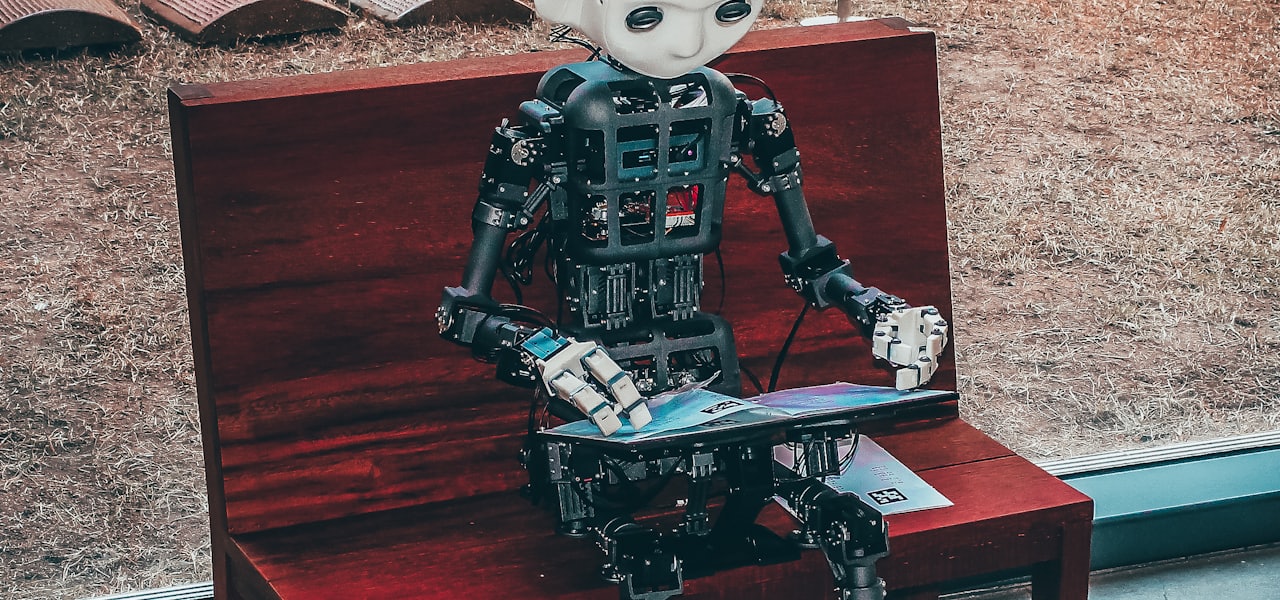
    Robotics is the branch of technology that deals with the design, construction, operation, structural disposition, manufacture and application of robots. Robotics is related to the sciences of electronics, engineering, mechanics, and software. The following is a list of common definitions related to the Robotics field. == A == Actuator: a motor that translates control signals into mechanical movement. The control signals are usually electrical but may, more rarely, be pneumatic or hydraulic. The power supply may likewise be any of these. It is common for electrical control to be used to modulate a high-power pneumatic or hydraulic motor. Aerobot: a robot capable of independent flight on other planets. A type of aerial robot. Arduino: The current platform of choice for small-scale robotic experimentation and physical computing. Artificial intelligence: is the intelligence of machines and the branch of computer science that aims to create it. Aura (satellite): a robotic spacecraft launched by NASA in 2004 which collects atmospheric data from Earth. Automaton: an early self-operating robot, performing exactly the same actions, over and over. Autonomous vehicle: a vehicle equipped with an autopilot system, which is capable of driving from one point to another without input from a human operator. == B == Biomimetic: See Bionics. Bionics: also known as biomimetics, biognosis, biomimicry, or bionical creativity engineering is the application of biological methods and systems found in nature to the study and design of engineering systems and modern technology. == C == CAD/CAM (computer-aided design and computer-aided manufacturing): These systems and their data may be integrated into robotic operations. Čapek, Karel: Czech author who coined the term 'robot' in his 1921 play, Rossum's Universal Robots. Chandra X-ray Observatory: a robotic spacecraft launched by NASA in 1999 to collect astronomical data. Cloud robotics: robots empowered with more capacity and intelligence from cloud. Combat, robot: a hobby or sport event where two or more robots fight in an arena to disable each other. This has developed from a hobby in the 1990s to several TV series worldwide. Cruise missile: a robot-controlled guided missile that carries an explosive payload. Cyborg: also known as a cybernetic organism, a being with both biological and artificial (e.g. electronic, mechanical or robotic) parts. == D == Degrees of freedom: the extent to which a robot can move itself; expressed in terms of Cartesian coordinates (x, y, and z) and angular movements (yaw, pitch, and roll). Delta robot: a tripod linkage, used to construct fast-acting manipulators with a wide range of movement. Drive Power: The energy source or sources for the robot actuators. == E == Emergent behaviour, a complicated resultant behaviour that emerges from the repeated operation of simple underlying behaviours. Envelope (Space), Maximum The volume of space encompassing the maximum designed movements of all robot parts including the end-effector, workpiece, and attachments. Explosive ordnance disposal robot A mobile robot designed to assess whether an object contains explosives; some carry detonators that can be deposited at the object and activated after the robot withdraws. == F == FIRST(For Inspiration and Recognition of Science and Technology): an organization founded by inventor Dean Kamen in 1989 in order to develop ways to inspire students in engineering and technology fields. Forward chaining: a process in which events or received data are considered by an entity to intelligently adapt its behavior. == G == Gynoid: A humanoid robot designed to look like a human female. == H == Haptic: tactile feedback technology using the operator's sense of touch. Also sometimes applied to robot manipulators with their own touch sensitivity. Hexapod (platform): A movable platform using six linear actuators. Often used in flight simulators and fairground rides, they also have applications as a robotic manipulator. Hexapod (walker): A six-legged walking robot, using a simple insect-like locomotion. Human–computer interaction. Humanoid: A robotic entity designed to resemble a human being in form, function, or both. Hydraulics: the control of mechanical force and movement, generated by the application of liquid under pressure. cf. pneumatics. == I == Industrial robot: A reprogrammable, multifunctional manipulator designed to move material, parts, tools, or specialized devices through variable programmed motions for the performance of a variety of tasks. Insect robot: A small robot designed to imitate insect behaviors rather than complex human behaviors. == K == Kalman filter: a mathematical technique to estimate the value of a sensor measurement, from a series of intermittent and noisy values. Kinematics: the study of motion, as applied to robots. This includes both the design of linkages to perform motion, their power, control and stability; also their planning, such as choosing a sequence of movements to achieve a broader task. Inverse Kinematics: the process of determining joint angles required for a robot's end-effector to reach a desired position and orientation in space. Used in motion planning to calculate motor commands from target positions. == L == Linear actuator A form of motor that generates a linear movement directly. == M == Manipulator or gripper: A robotic 'hand'. Mobile robot: A self-propelled and self-contained robot that is capable of moving over a mechanically unconstrained course. Muting: The deactivation of a presence-sensing safeguarding device during a portion of the robot cycle. Mecanum wheel: A wheel fitted with angled rollers that enables a robot vehicle to move in multiple directions, including sideways. == O == Ornithopter – An aerial robot or drone that achieves flight through a flapping-wing mechanism rather than rotating blades or fixed wings, often utilized for highly maneuverable flight. == P == Parallel manipulator: an articulated robot or manipulator based on a number of kinematic chains, actuators and joints, in parallel. cf. serial manipulator. Pendant: Any portable control device that permits an operator to control the robot from within the restricted envelope (space) of the robot. Pneumatics: the control of mechanical force and movement, generated by the application of compressed gas. cf. hydraulics. Powered exoskeleton: is a wearable mobile machine that allow for limb movement with increased strength and endurance. Prosthetic robots: programmable manipulators or devices for missing human limbs. == R == Remote manipulator: A manipulator under direct human control, often used for work with hazardous materials. Robonaut: a development project conducted by NASA to create humanoid robots capable of using space tools and working in similar environments to suited astronauts. == S == Sensor fusion:The process of combining data from multiple sensors, such as LiDAR, cameras, global positioning systems (GPS), and inertial measurement units (IMUs), to produce a more accurate and reliable understanding of an environment than using a single sensor alone. It is widely used in robotics and autonomous systems to improve perception, localization, and decision-making. Serial manipulator: an articulated robot or manipulator with a single series kinematic chain of actuators. cf. parallel manipulator. Service robots are machines that extend human capabilities. Servo, a motor that moves to and maintains a set position under command, rather than continuously moving. Servomechanism An automatic device that uses error-sensing negative feedback to correct the performance of a mechanism. Single Point of Control The ability to operate the robot such that initiation or robot motion from one source of control is possible only from that source and cannot be overridden from another source. Slow Speed Control A mode of robot motion control where the velocity of the robot is limited to allow persons sufficient time either to withdraw the hazardous motion or stop the robot. Snake robot A robot component resembling a tentacle or elephant's trunk, where many small actuators are used to allow continuous curved motion of a robot component, with many degrees of freedom. This is usually applied to snake-arm robots, which use this as a flexible manipulator. A rarer application is the snakebot, where the entire robot is mobile and snake-like, so as to gain access through narrow spaces. Stepper motor Stewart platform A movable platform using six linear actuators, hence also known as a Hexapod. Subsumption architecture A robot architecture that uses a modular, bottom-up design beginning with the least complex behavioral tasks. Surgical robot, a remote manipulator used for keyhole surgery Swarm robotics involve large numbers of mostly simple physical robots. Their actions may seek to incorporate emergent behavior observed in social insects (swarm intelligence). Synchro == T == Teach Mode: The control state that al

    Read more →
  • Matt Mullenweg

    Matt Mullenweg

    Matthew Charles Mullenweg (born January 11, 1984) is an American web developer and entrepreneur. He is known as a co-founder of the free and open-source web publishing software WordPress, and the founder of Automattic. == Early life and education == Mullenweg was born January 11, 1984, in Houston, Texas, to Chuck and Kathleen Mullenweg and grew up in the Willowbend neighborhood. His older sister was born in 1974. His father, who died in 2016, was a computer programmer who worked for Brown & Root, and encouraged his children to start using home computers at an early age. His mother was a stay-at-home mother. The Mullenwegs were raised Catholic. He attended Kinder High School for the Performing and Visual Arts, studying jazz and playing the saxophone. Mullenweg suffered from migraines as a child that forced him to miss extended periods of school. He attended the University of Houston for two years, studying philosophy and political science. He dropped out after his sophomore year in 2004 to work for CNET, which promised him that he could allocate time to the development of WordPress. == Career == Mullenweg began blogging in 2002 on the open source platform b2. B2 developer Michael Valdrighi abandoned the project and Mullenweg took it over in 2003. He and Mike Little created a b2 fork that year they called WordPress and published it under the GNU General Public License. In March 2003, he co-founded the Global Multimedia Protocols Group (GMPG) with Eric A. Meyer and Tantek Çelik. In April 2004, he helped launch Ping-O-Matic, a mechanism for notifying search engines about blog updates. In October 2004, he was hired by CNET who would allow him to develop WordPress part-time as part of his job. He dropped out of college and moved to San Francisco for the position. === Automattic === After leaving CNET in 2005, Mullenweg founded Automattic as a fully distributed company. Toni Schneider was hired as CEO so Mullenweg could learn how to manage a large organization. During this period, Mullenweg focused on product development while Schneider managed the company. In January 2014, Mullenweg resumed the role of CEO, replacing Schneider. He led Automattic's expansion and a series of acquisitions, including WooCommerce in 2015, The Atavist Magazine in 2018, Tumblr in 2019, Pocket Casts in 2021, and Beeper in 2024. Mullenweg received the Heinz Award for Technology, the Economy and Employment in 2016, for "helping to democratize online publishing". Automattic's valuation reached $7.5 billion in 2021. At the time, WordPress hosted 28 million websites, or 40 percent of all websites on the Internet. == Public disputes == On several occasions, Mullenweg has publicly challenged competitors to WordPress and WordPress.com. He has stated that he prefers to settle disputes in the court of public opinion and described his approach as "brinksmanship", noting that the potential cost of legal action could put Automattic in a "tough spot". In 2008, shortly before WordPress 2.5's release, Six Apart's Movable Type published "A WordPress 2.5 Upgrade Guide"—a comparison of their CMS with their rival, WordPress—as a company blog article that Mullenweg characterized as "desperate and dirty". In 2013, developers on the digital marketplace Envato were banned from speaking at WordPress events after he criticized the platform for selling WordPress themes with the graphics and CSS components under a proprietary license instead of the GPL. In 2016, Mullenweg accused Wix.com, a competitor to WordPress.com, of reusing WordPress's mobile text editor code in Wix's own mobile app without adhering to the terms of the GPL. Despite the license's requirement to publish anything built with GPL code under the GPL, Wix's CEO claimed that the company open-sourced their forked version of the component and satisfied the license's terms before the app switched to its own fork of the MIT-licensed text editor that the WordPress editor was based upon. The new fork added a clause to the MIT license that forbids redistribution under any other license. In 2022, Mullenweg criticized GoDaddy for not reinvesting in the WordPress project sufficiently. On January 9, 2025, the representative of the WordPress Sustainability team, Thijs Buijs, resigned via WordPress.org’s Slack channel, citing dissatisfaction with Matt Mullenweg’s December 24, 2024, Reddit post titled “What drama should I create in 2025?” highlighting concerns about what he described as “unsustainable leadership”. In response, Matt Mullenweg thanked Thijs Buijs for reminding him of the existence of a sustainability team, announced its disbanding, and subsequently closed Wordpress.org's #sustainability Slack channel. === Tumblr === Mullenweg began a three-month sabbatical from his role as CEO at the beginning of February 2024. During that time, Mullenweg engaged in a public feud with a transgender Tumblr user who, frustrated with the failure of Tumblr (owned by Automattic) to address transphobic harassment, posted that she wished Mullenweg would die in a comedic way. The user was subsequently banned. Responding to user uproar, Mullenweg addressed the ban in posts on his personal Tumblr blog, in which he characterized the post as a death threat, and shared private account information about the user. Mullenweg also responded to individual commenters on Tumblr in posts and direct messages, and went to Twitter to respond to the banned user's tweets about the situation. A few days later, transgender employees of Tumblr and Automattic made a post on the official Tumblr staff blog characterizing his response as "unwarranted and harmful" and stating that he did not speak on their behalf. They also said that the user's post was not a realistic threat of violence and not the reason for her ban. === WP Engine dispute === == Audrey Capital == Mullenweg is a principal at angel investment firm Audrey Capital, which he co-founded in 2008 alongside Naveen Selvadurai and Audrey Kim. As of 2024, the company lists investments in companies such as CoinDesk, MakerBot, Sonos, SpaceX, Ring, as well as software companies including Calm, Chartbeat, DailyBurn, Memrise, Genius, Nord Security and Telegram. It has also funded startups that provide services to web developers including Creative Market, GitLab, NPM, SendGrid, Stripe and Typekit. From 2017 to 2019, Mullenweg also served as a board member for GitLab. Mullenweg has employed a team of contributors to WordPress through Audrey Capital since 2010, who work separately from Automattic. On the 20th anniversary of WordPress' initial release, Mullenweg announced a scholarship program aimed at the children of significant contributors to open-source projects.

    Read more →
  • Texas House Bill 20

    Texas House Bill 20

    An Act Relating to censorship of or certain other interference with digital expression, including expression on social media platforms or through electronic mail messages, also known as Texas House Bill 20 (HB20), is a Texas anti-deplatforming law enacted on September 9, 2021. It prohibits large social media platforms from removing, moderating, or labeling posts made by users in the state of Texas based on their "viewpoints", unless considered illegal under federal law or otherwise falling into exempted categories. It also requires them to make various public disclosures relating to their business practices (including the impact of algorithmic and moderation decisions on the content that is delivered to users). The bill is part of a wider array of Republican-backed legislation seeking to prohibit the censorship of political speech, based on allegations that the moderation policies of large social media platforms are not politically neutral. It has been challenged in NetChoice, LLC v. Paxton, and is currently the subject of a circuit split between the Fifth Circuit, and a decision by the Eleventh Circuit that struck down a similar bill in the state of Florida. In September 2023, the U.S. Supreme Court agreed to hear NetChoice v. Paxton jointly with NetChoice v. Moody on questions of whether the Florida and Texas state laws are in compliance with the 1st Amendment. == Content == The law applies to "social media platforms" that serve users in the state of Texas, and have more than 50 million monthly active users in the United States. They are defined as any public internet website or application that allows users to "communicate with other users for the primary purpose of posting information, comments, messages, or images", excluding internet service providers, electronic mail, and services where communication features are "incidental to, directly related to, or dependent on" content that is pre-selected by the operator. In the bill, to "censor" is defined as to "block, ban, remove, deplatform, demonetize, de-boost, restrict, deny equal access or visibility to, or otherwise discriminate against" expression. The law prohibits social media platforms from "censoring on the basis of user viewpoint, user expression, or the ability of a user to receive the expression of others", or on the basis of a user's geographic location in Texas. This includes removal or labeling posts with warnings and disclaimers. Social media platforms may only censor content if it is unlawful, they are "specifically authorized" to do so by federal law, based on requests from "an organization with the purpose of preventing the sexual exploitation of children or protecting survivors of sexual abuse from ongoing harassment", or "directly incites" criminal activity or contains threats of violence against persons based on protected categories. It is disputed over whether this provision is actually enforceable, as it may be preempted by Section 230 of the Communications Decency Act (which states that the operators of interactive computer services are not responsible for the actions of their users). Social media platforms must make public disclosures regarding the algorithmic techniques and moderation polices that are used to determine the content provided to users, must publish a compliant acceptable use policy (AUP), and must publish a biannual transparency report containing specific details on all actions made by the service regarding the moderation of users and content. The law also prohibits email providers from "intentionally imped[ing] the transmission of another person's electronic mail message based on the content." == Legislative history == Texas Governor Greg Abbott signed the bill into law on September 9, 2021. Democrat-proposed amendments excluding Holocaust denial, terrorism content, and vaccine misinformation from the bill were rejected. Following a suit by the industry groups Computer & Communications Industry Association (CCIA) and NetChoice, NetChoice, LLC v. Paxton, the bill was blocked by U.S. District Judge Robert Pitman in December 2021, on First Amendment grounds. Texas appealed to the United States Court of Appeals for the Fifth Circuit. Judges Edith Jones, Andrew Oldham, and Leslie H. Southwick, lifted the injunction on May 11, 2022, but the decision was appealed to the Supreme Court which suspended the bill pending a full review in the Fifth Circuit. On September 16, 2022, the Fifth Circuit reversed the injunction, allowing the bill to take effect; Judge Oldham stated that the bill "chills censorship" and "does not chill speech", and accused the plaintiffs of "attempt[ing] to extract a freewheeling censorship right from the Constitution's free speech guarantee. The Platforms are not newspapers. Their censorship is not speech." Southwick dissented, stating that "we are in a new arena, a very extensive one, for speakers and for those who would moderate their speech. None of the precedents fit seamlessly." The CCIA and NetChoice requested a stay on the ruling and that the case be taken to the Supreme Court, arguing that the reversal conflicts with an Eleventh Circuit decision in NetChoice v. Moody which struck down a similar anti-moderation bill imposed by the state of Florida. On October 12, 2022, the Fifth Circuit granted the stay.

    Read more →